
Snowflakes (pt 2)

Yesterday we walked into the woods while it was snowing. We were walking towards an empty field where we had dug a hole to bury my cat Kobo last July. We hadn’t planned to go there, just to walk out in the snow, but that’s where we ended up. In the woods you stopped to scoop out a rock or splinter that had wormed its way inside your boot and, balanced perfectly on your left foot for the couple minutes that it took to find the infiltrating object, said you found the forest frightening. In the meantime I rolled up my hat and bared my ears to better hear the silence, otherwise muffled. The grass had not been covered all the way when we came out from the trees into the field, which made it easier to find the spot, between a large oak and a half-collapsed old coop, of her unmarked grave. As we walked we spotted several tracks, some perfect walkers and some not, others bounds and hops, in loops or crossing lines, voles, mice, rabbits, and deer. A reindeer? you suggested; nope, but good guess though!
I remember staring into Kobo’s eyes when she was put down in the back room at the vet, after the doctor had too hurriedly administered the final set of shots without stopping to offer the requisite decomposition time (decompression, I meant to write) between each stage as had been promised by the harried nurse, for which she (the nurse) came back in to strenuously express regret, and when the doctor told us that Kobo’s heart had at last stopped it seemed as though her eyes had not stopped staring, were still open and alert. For whatever reason this was comforting to me and I remember that at the same time I was crying I also felt a well of laughter rising up, and that it felt as through this laughter had passed out of her and into me right at the instant of her death. Don’t worry, please, I told the nurse, grinning sincerely. Nobody’s death could possibly go faster than it needs to, I thought but didn’t say. As we stood there in the empty field you asked if I could do her voice. I could: me-oww.
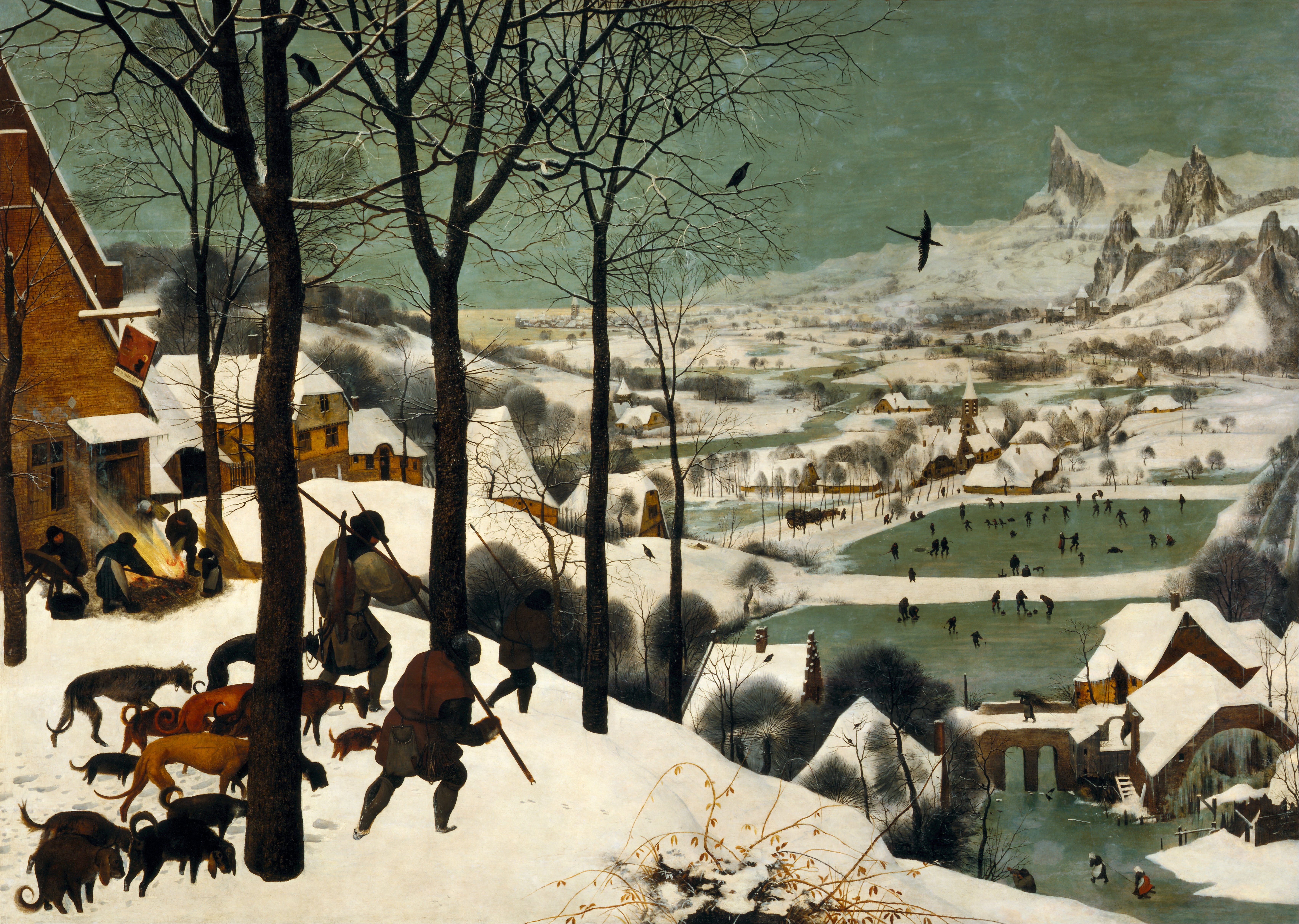
As a child, when it snowed, I always walked into the backyard or the meadow in the yard behind ours, far enough so that I couldn’t see our house or (if it were a blizzard or the snow was thick enough) even the wall of trees around our yard. Whenever adults used words like heaven or paradise I pictured this, standing in the middle of a whirling void, like the static of dead channels on TV, the lightest tsssk of falling snow, the wind through distant pines, a growing dark. Maybe it was just the thought of going back inside that signalled paradise (everything a little reddish as you shed your wet clothes, somebody having run your favorite sweatsuit through the dryer), where comforts opposite from silence and obliteration reigned. It strikes me now that the field of snow is something like an empty page and me the cursor, flickering. Anne Carson calls this practice snow standing, where the outer world subtracts itself until the inner sounds appear:
It is very cold, then that, too, begins to subtract itself, the body chills on its surface but the core is hot and it is possible to disconnect the surface, withdraw to the core, where a ravishing peace flows in, so ravishing I am unembarrassed to use the word ravishing, and it is not a peace of separation from the senses but the washing-through peace of looking, listening, feeling, at the very core of snow, at the very core of the care of snow.1
Last week we went with friends to see a concert of Fauré’s Requiem at Mount Holyoke. From where we sat up in the chapel balcony, the music was a little muddy, the organ sometimes sloppy or too muted. By the time they got to paradisum it felt both rushed and dragged along, as if the chorus had started running out of time. Slightly annoyed and studying the folded program in my hands, I wondered what the phrase eternal rest could mean. Resting from what? If the rest is endless then what are they resting for? If without end, wouldn’t it be the same as nothing, nothingness, and if that was the case why deny the comfort of this nothing with a patent euphemism, as if the dead, to cover up the shame and scandal of their dying, had been committed by the living to a kind of frozen sanatorium, against their will? The program was careful to mention that the requiem, although it had been composed at around the time of both of Fauré’s parents’ (unrelated) deaths, was not written in response to that. My requiem, he wrote, “wasn’t written for anything — for pleasure, if I may call it that.” After the paradisum the choral society was joined onstage by a group of children to sing a version of the Beatle’s All You Need Is Love, with lyrics that went “love, love, love, love, love, love, love, all you need is love, love, love, love, love, love, love, love, love,” etc. At the end the audience was asked to join in singing and most did. There was something so sublime and stupid in the scene that I began to laugh at the same time that I joined in singing in a half-mumble and cried slightly.
On the way back from the meadow yesterday you told me that your grandparents or great-grandparents in Vermont had been on friendly terms with Robert Frost, that he would always stay with them whenever he came to visit Lake Willoughby. Later when we got back home you played a vinyl record, it must have been one of the landlord’s records, of him reading. Frost was arrogant, obnoxious, and had awful politics, we both agreed, but at least I think he had a decent sense of craft. Halfway through “Birches” (which he recorded in a gruff, impatient tone) the poet manages to escape the trap of syrupy nostalgia (in this case for young boys conquering the stiffness out of trees) to move into a strange expression of of his wish to get away from earth and then come home, not to die exactly but just to be scooped up and put back down, as if by a giant crane or flying saucer. The birch that had been transformed into the hunched-over body of the old man looking back was now a ladder, on whose branches he climbs up toward heaven, at least only halfway up, until it bends and brings him down again; or perhaps the branches, on the striped white bark, become the written text of the poem itself, that seems to promise a deliverance or at least a complete idea or thought from which we might begin anew but which stops us halfway up and drops us in the pathless field where we began.
I can’t find any evidence of your grand- or great-grandparents having known Robert Frost after a half-hour’s search online, nor any evidence of the journal written by the father of one of your favorite painters which you read somewhere online five years ago about his time as sexton in the nineteenth century and in which he describes his daily labor digging graves as if a zen-like exercise. The facts are less important then the story, which you tell until we get inside.
Anne Carson, “Merry Christmas from Hegel”